
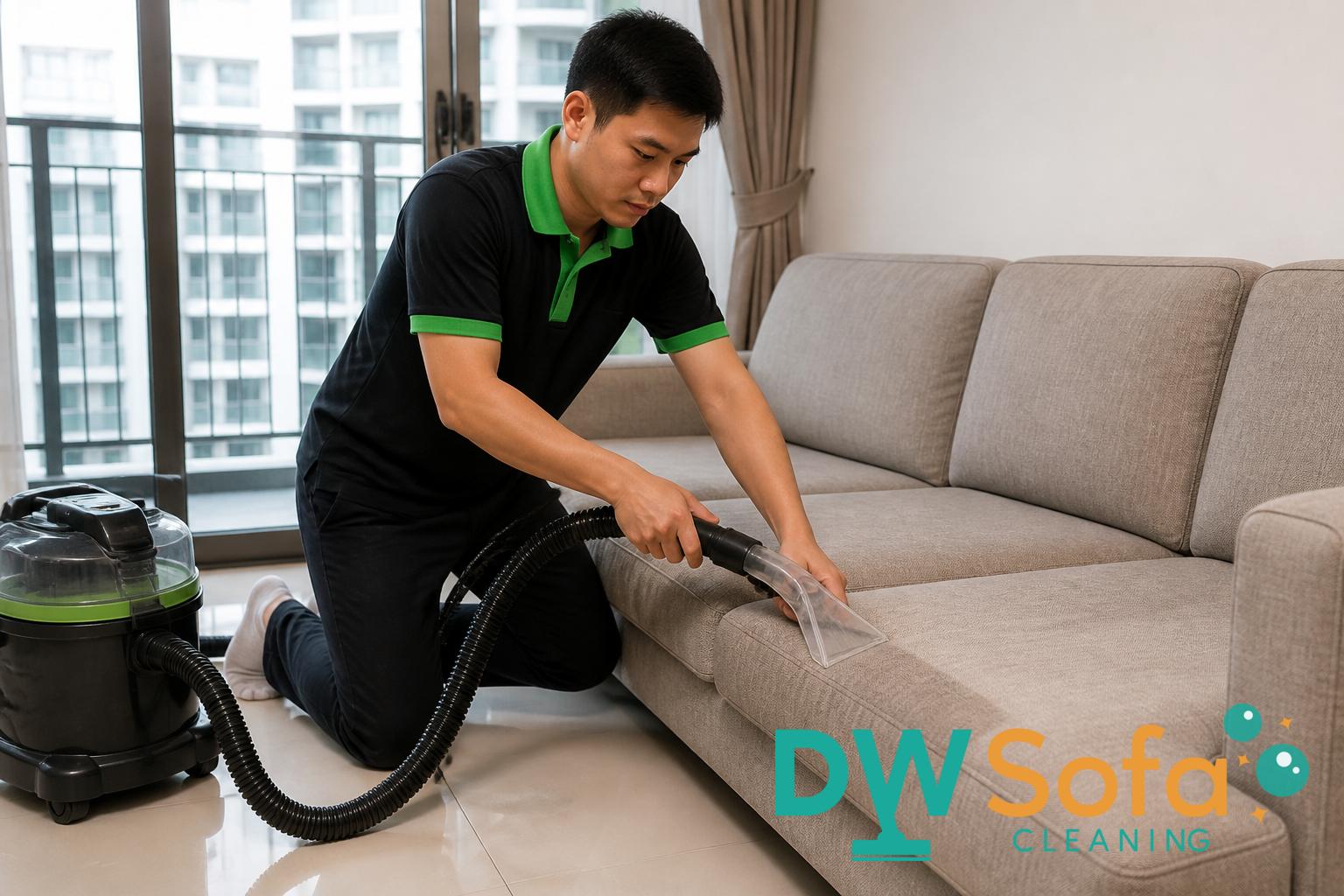
Booking sofa cleaning in Singapore should be a simple decision, but the quality of service can vary quite a lot. Before you confirm an appointment, it helps to know what to check so you can choose a provider that suits your sofa material, the type of stains you have, and the condition of the furniture. A little careful checking now can save you from over-wetting, poor stain treatment, colour transfer, or a result that looks clean only on the surface.
Check the sofa material before anything else
The first thing to confirm is what your sofa is made of. Fabric sofa cleaning, suede-like upholstery, microfibre, velvet, and leather all need different handling. A proper sofa cleaning service should ask about the material before recommending sofa steam cleaning, deep cleaning, or stain removal.
If you are not sure of the fabric type, look for a care label, product tag, or manufacturer details. In Singapore homes, many sofas are placed in living rooms with daily use, so the cleaning method must match the upholstery rather than using one standard approach for every sofa.
Ask what cleaning method will be used
Different methods deliver different results. Some sofas may benefit from low-moisture extraction, while others need targeted sofa stain removal or a more thorough sofa deep cleaning. Steam cleaning can be useful for many fabric sofas, but it is not always suitable for delicate materials or older upholstery that may react badly to heat and moisture.
Before booking, ask the cleaner to explain the method in plain terms. You should understand whether the service will focus on dirt extraction, odour removal, stain treatment, sanitisation, or all of these. A reliable provider should not be vague about how your sofa will be treated.
Find out how they handle stains and problem areas
Not all stains are the same. Food spills, drink marks, body oils, pet accidents, and ink stains each require different treatment. If your sofa has a specific issue, check whether the company has experience with that type of sofa stain removal and whether they will pre-treat the affected spots before the main cleaning process.
It is also worth asking what happens if a stain is old or has already set into the fibres. In some cases, a cleaner can improve the appearance significantly, but not guarantee complete removal. Being realistic about expected results is important, especially for light-coloured sofas or upholstery that has absorbed stains over time.
Check the drying time and moisture control
One of the most practical things to ask about is drying time. In Singapore’s humid weather, a sofa that stays damp for too long can become uncomfortable to use and may develop a stale smell. A professional service should use a controlled process that avoids over-wetting the cushions and fabric.
Ask how long the sofa is likely to take to dry and what you should do afterwards, such as increasing ventilation or avoiding use for a period. If a cleaner cannot explain their moisture control approach clearly, that is usually a warning sign.
Review experience with local home settings
Sofa cleaning in Singapore often takes place in HDB flats, condominiums, and landed homes where space is limited and access may be tight. It is sensible to check whether the cleaner is used to working in these environments, especially if the sofa is large, difficult to move, or located in a high-traffic living area.
Practical experience matters because a cleaner should know how to work neatly in a home, protect nearby furniture, and manage equipment without causing unnecessary disruption. For many homeowners, this matters just as much as the actual cleaning result.
Ask about safety for children, pets, and sensitive users
If you have young children, pets, or family members with allergies, ask what products will be used on the sofa. A trustworthy upholstery cleaning service should be able to explain whether the cleaning agents are suitable for everyday household use and whether any residues will remain after treatment.
You should also ask about odour after cleaning. Some chemicals leave a strong scent that lingers on the upholstery, which can be unpleasant in enclosed living spaces. A careful cleaner will aim for a fresh finish without leaving the sofa overly perfumed or chemically harsh.
Look for clear service scope and honest expectations
Before booking, make sure you know exactly what is included. Does the service cover vacuuming, pre-treatment, deep extraction, cushion cleaning, and spot treatment, or only the visible fabric surface? Will backrests, armrests, and cushion sides be cleaned as part of the job?
This is especially important if your sofa has multiple cushions, removable covers, or mixed materials. Clear service scope prevents misunderstandings and helps you compare sofa cleaning services in Singapore more fairly. A good provider should be able to explain what is covered and what may require extra attention.
Check pricing, quotation details, and any added charges
Price alone should not be the only deciding factor, but the quotation should still be easy to understand. Ask whether the quoted amount depends on sofa size, number of seats, type of material, stain severity, or the level of sofa deep cleaning required. Transparent pricing makes it easier to choose confidently.
It is also wise to ask if there are additional charges for heavily soiled upholstery, urgent appointments, or specialised stain treatment. A clear quotation should reduce surprises on the day of service and help you compare different providers on equal terms.
Confirm what to do before the appointment
Good preparation can make sofa cleaning more effective. Before the cleaner arrives, remove loose items such as cushions, throws, toys, and decorative pieces from the sofa and surrounding area. This gives the technician space to work and helps the cleaning process begin without delay.
If there are specific stains, point them out at the start so the cleaner can treat them properly. It also helps to mention if the sofa has been previously cleaned, repaired, or exposed to water damage, as these details may affect how the upholstery should be handled.
If you would like to discuss the right sofa cleaning, sofa deep cleaning, sofa steam cleaning, or sofa stain removal approach for your furniture, you can WhatsApp DW Sofa Cleaning Singapore for a quotation based on the material and condition.
Conclusion
Before booking sofa cleaning in Singapore, focus on the material, cleaning method, stain type, drying time, safety, service scope, and pricing transparency. These checks help you avoid unsuitable treatment and improve the chance of a clean, fresh sofa that is cared for properly. When you choose a provider with the right experience and clear communication, the whole process becomes far more straightforward.
Choose DW Sofa Cleaning Singapore
DW Sofa Cleaning Singapore offers you a one-stop solution for your sofa cleaning needs in Singapore. Our professional and reliable services include sofa deep cleaning, sofa stain removal, and upholstery cleaning. Our professional sofa cleaning specialists will ensure to perform the cleaning services professionally. Check out our articles for an extensive view of our services and cleaning tips. Do not hesitate to call us or contact us via Whatsapp at +65 8241 0032 to solve any of your sofa cleaning needs!
Frequently Asked Questions
How do I know if my sofa needs steam cleaning or a different method?
That depends on the sofa material and condition. Many fabric sofas can be cleaned with steam or hot-water extraction, but delicate upholstery may need lower-moisture treatment. A proper assessment before booking is the safest way to choose the right method.
Can sofa stains be completely removed?
Not always. Fresh stains usually respond better than older, set-in marks. The final result depends on the stain type, fabric, and how long the stain has been on the sofa. A professional cleaner should explain what is realistically achievable before starting.
How long should I wait before using the sofa again?
Drying time varies based on the cleaning method, upholstery type, and humidity levels in the home. In Singapore, it is best to allow enough ventilation and follow the cleaner’s advice so the fabric dries properly before regular use.